What is reputation monitoring?
Reputation monitoring is the standing practice of watching the public places where something about you can appear, so that you learn about new material from your own system rather than from a customer. In practice it is a defined list of surfaces, a defined cadence for each, and somewhere to write down what you find. The surfaces are reviews, social mentions, forums, news, complaint bodies, search results for your name, and now the answers AI assistants give when asked about you. This page covers what belongs on that list, how often each item needs checking, and what monitoring cannot see.
What reputation monitoring covers
Monitoring is not a tool, it is a habit with tools attached. The aim is narrow: you find out from your own system, not from a customer forwarding you a link.
Two things make monitoring worth doing. The first is time. Almost every reputation problem is cheaper to handle in the week it appears than in the quarter it appears, because a review can still be answered while the customer is reachable, a factual error can still be corrected before it is copied, and a thread can still be joined before it is archived. The second is pattern. A single complaint is an incident; the same complaint four times is a process defect, and you only see the shape if the mentions are collected somewhere.
The surfaces worth watching
Coverage matters more than sophistication. A plain spreadsheet checked reliably beats an expensive dashboard nobody opens.
| Surface | What appears there | How to watch it | Realistic cadence |
|---|---|---|---|
| Search results for your name | New pages, rankings shifting, unfamiliar sites | Manual search in a private window, or a rank tracker | Weekly |
| Google Business Profile | Reviews, photos, questions, edits by others | Profile notifications, plus a manual look | Daily for reviews |
| Other review platforms | Category and industry specific ratings | Platform alerts where offered | Weekly |
| Social mentions | Tagged and untagged mentions, comments | Native search plus a listening tool | Daily |
| Forums and communities | Recommendation threads, complaints, questions | Saved searches on the platform | Weekly |
| News and press | Coverage, mentions in roundups, syndication | Alerts on brand and executive names | Daily alert, weekly review |
| Complaint bodies | Formal complaints filed against a business | Direct account access | Weekly |
| Employer review sites | Staff commentary, which buyers do read | Manual check | Monthly |
| AI assistants | What a model says when asked about you | Manual prompting, logged | Monthly |
| Autocomplete and related searches | Suggested phrases attached to your name | Manual search | Monthly |
Complaint bodies deserve a specific mention because they operate on their own timetable and their pages rank. Understanding how Better Business Bureau complaints work, including the response window and what gets published, is worth ten minutes before one arrives rather than after.
How often each thing needs looking at
Cadence is where monitoring programmes fail. Everything set to real time produces noise nobody reads, and everything set to monthly means you learn about a problem too late to do anything useful.
- Real time, but only for named alerts. Your brand, your own name, your executives. These should interrupt you.
- Daily, in one short pass. New reviews and new social mentions. Ten minutes, at a fixed time.
- Weekly. Page one of search for the brand name and the two or three phrases buyers actually use. Note what moved.
- Monthly. Autocomplete, AI assistant answers, employer sites, and a look at the review distribution rather than the average.
- Quarterly. A full pass: every platform, every profile, data broker listings for individuals, and a comparison against the same pass three months earlier.
Monitoring what AI assistants say about you
This surface is new and most monitoring stacks ignore it, which is a mistake when a growing share of buyers ask an assistant before they ask a search engine. The method is manual and it works.
Write down the five to ten questions a buyer would actually ask: who are the best providers of this in my city, is this company legitimate, what do people complain about with this company, is this person qualified. Ask them in each assistant your customers plausibly use. Save the full answer text and, more importantly, the sources cited. Do it monthly, from a signed out session where possible.
Two cautions keep this honest. Answers vary between sessions, accounts and regions, so one answer is a sample and not a finding; you are watching for what repeats. And the lever is almost never the model itself, it is the pages the model is reading. When an answer is wrong, the fix usually starts with the source that made it wrong, which is covered in how to fix wrong information in AI answers.
Which alerts deserve an action
Most alerts require nothing. A triage rule keeps the habit sustainable, and five questions sort almost everything:
- Does it rank, or is it likely to?
- Does it repeat something you have seen before?
- Does it state a fact that is false, as opposed to an opinion you dislike?
- Does it name a person rather than the business?
- Is there a customer at the other end of it who can still be helped?
A yes to the last one is usually the highest value item in the queue, and it is the one that gets ignored while people argue about the ones they cannot change. Note also that responding is expected but retaliating is regulated: the FTC's own Q and A on the Consumer Reviews and Testimonials Rule sets out what counts as review suppression, including using unfounded legal threats to force a review down.
What monitoring will not see
Being honest about the blind spots is what stops a dashboard from becoming false comfort. Monitoring cannot read private groups, direct messages, closed communities, group chats, or anything behind a login. It misses content that names you without using your exact brand string, and it misses images and video where your name is spoken rather than typed. Free tools index a fraction of what paid tools do, and both miss more than their marketing implies.
The sentiment column in most dashboards deserves the same scepticism. Automatic polarity labelling comes out of natural language processing methods whose limits are well documented in the research literature, much of it indexed in the ACL Anthology of natural language processing research, and it mislabels sarcasm, negation and industry vocabulary routinely. Read the tagged negatives yourself before you report a trend.
A free monitoring stack that works
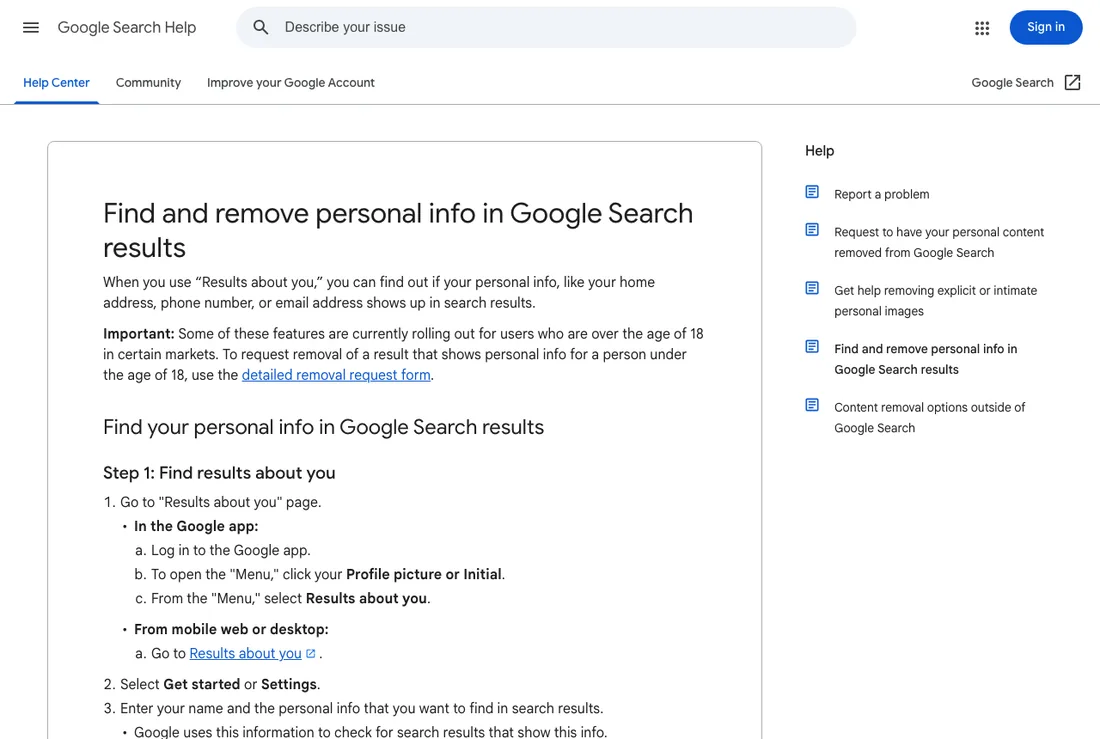
Google's Results about you tool. For individuals it does double duty: it requests removal of personal contact details and it can notify you when new results containing them appear. Screenshot taken 19 August 2026.
Alerts on your brand and personal names, notifications enabled on every review platform where you have a profile, Search Console for what people search before they reach you, a saved search on the two forums your buyers actually use, and one dated row in a spreadsheet each month recording what page one looked like. That is most of the value, and it costs nothing but the ten minutes.
Write the results down with dates. A monitoring log is what turns an anxious feeling that things are getting worse into a checkable question, and it is the first thing a reputation audit asks to see.
Questions about reputation monitoring: what to track
What is reputation monitoring?
It is a standing watch over the public places where something about you can appear: reviews, mentions, forums, news, search results and AI answers, each checked on a set cadence and logged so patterns become visible.
What should I monitor?
At minimum your brand name and the names of anyone publicly attached to it, every review platform where you have a profile, page one of search for your brand, the forums your buyers use, and once a month what AI assistants say when asked about you.
How often should I check my online reputation?
Reviews and social mentions daily in one short pass, search results weekly, autocomplete and AI answers monthly, and a full audit of every profile and platform quarterly.
Do I need paid monitoring software?
Not to start. Alerts on your names, notifications turned on at every review platform, Search Console and a dated spreadsheet cover most of the value. Paid tools mainly buy wider source coverage and history.
Can monitoring tools see everything said about me?
No. Private groups, direct messages, closed communities and anything behind a login are invisible, as is content that discusses you without using your exact name.